
Recent lightning strike in Central Florida highlights the importance of lightning awareness, storm preparedness, and protecting Florida homes and businesses.
A routine evening walk turned into a life-threatening emergency for a Central Florida couple when lightning struck near them on the popular West Orange Trail in Winter Garden on September 2, 2026.
The incident received widespread media attention after both individuals were transported to the hospital in critical condition. Fortunately, subsequent reports confirmed that the husband and wife survived and were recovering.
Their experience serves as an important reminder that lightning can strike unexpectedly, even when a storm appears to be some distance away.
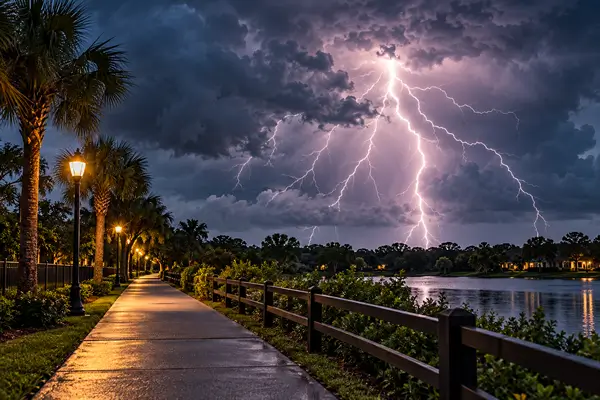
Lightning Protection in Florida
What Happened on the West Orange Trail?
According to reports from WESH 2 News and other Central Florida news outlets, Aaron and Clare Walenga were walking together on the West Orange Trail near downtown Winter Garden when lightning struck.
Emergency responders arrived shortly after 7:25 p.m. and found the couple injured. One victim was reportedly not breathing, prompting bystanders to begin lifesaving assistance before emergency personnel arrived.
Both were transported to Orlando Regional Medical Center in critical condition.
In follow-up interviews published later in September, the couple described their frightening experience and expressed gratitude to the people who helped save their lives.
The incident demonstrates how quickly Florida’s thunderstorms can become dangerous, even during ordinary outdoor activities.
Related News Coverage:
- WESH 2 News: Couple in Critical Condition After Lightning Strike on Central Florida Trail
- ClickOrlando: Couple Struck by Lightning Credits Good Samaritans With Saving Their Lives
Why Lightning Is a Serious Concern in Florida
Florida experiences frequent thunderstorms, particularly during the warmer months when heat, humidity, and atmospheric conditions contribute to storm development.
Lightning can occur before heavy rain arrives, making it especially dangerous for people walking, biking, golfing, boating, or participating in other outdoor activities.
Lightning also presents significant risks to residential and commercial properties.
A lightning strike can potentially cause:
- Structural fires and roof damage
- Damage to electrical wiring and equipment
- Failure of heating, cooling, and electronic systems
- Damage to appliances, security systems, and sensitive electronics
- Electrical surges that affect connected equipment
While lightning cannot be prevented, homeowners and business owners can take practical steps to reduce the risks associated with lightning strikes.
Lightning Safety: What Florida Residents Should Know
The Winter Garden incident reinforces the importance of taking lightning warnings seriously.
When thunderstorms approach, remember these important safety precautions:
Seek shelter immediately. If you hear thunder, move inside a substantial enclosed building or a fully enclosed, hard-topped vehicle.
Avoid open areas. Parks, walking trails, golf courses, beaches, and open fields can become dangerous during thunderstorms.
Stay away from isolated trees and metal structures. Trees, fences, and other conductive objects do not provide safe shelter from lightning.
Do not rely on umbrellas for protection. An umbrella does not provide lightning protection.
Wait before returning outdoors. Remain inside for at least 30 minutes after the last sound of thunder.
These precautions are especially important in Florida, where thunderstorms can develop rapidly.
Protecting Florida Homes and Businesses From Lightning Damage
Although personal lightning safety begins with finding proper shelter, protecting buildings requires a different approach.
A professionally designed lightning protection system helps manage the electrical energy associated with a lightning strike by providing an intended path to ground.
A complete system may include:
- Lightning rods or air terminals
- Conductors connecting the system components
- Grounding electrodes
- Bonding of appropriate metallic systems
- Coordinated surge protection devices
When properly designed and installed according to applicable standards, these systems can help reduce the risk of lightning-related structural damage and fire.
However, no lightning protection system can eliminate every risk or guarantee complete protection against all lightning-related damage.

Why Professional Installation Matters
Lightning protection is more than simply placing a lightning rod on a roof.
An effective system requires proper design, installation, grounding, bonding, and attention to the building’s construction and electrical systems.
Standards such as NFPA 780 and UL 96A provide important guidance for lightning protection system design and installation.
For Florida property owners, professional evaluation can help determine an appropriate approach based on the building’s size, location, construction, and exposure.
Is Your Florida Property Prepared for Lightning Season?
The recent lightning strike in Winter Garden is a reminder that severe weather can affect Florida communities with little warning.
While no building protection system can make outdoor activities safe during a thunderstorm, a properly installed lightning protection system can help reduce certain risks to homes, businesses, and other structures.
Property owners should consider having existing systems inspected periodically, particularly after roofing work, building renovations, or suspected lightning damage.
For properties without lightning protection, a professional assessment can help identify potential vulnerabilities and appropriate protective measures.
Contact Coastal Lightning Rods for Lightning Protection Installation
At Coastal Lightning Rods, we understand the importance of protecting Florida properties from lightning-related damage.
Whether you are considering a new lightning protection system or need an existing system evaluated, taking preventive measures before the next thunderstorm is a sensible investment in your property.
Don’t wait until lightning causes damage to consider your protection options.
Contact Coastal Lightning Rods to learn more about residential and commercial lightning protection installation.

Visit Coastal Lightning Rods to request information about lightning protection for your property.
Disclaimer: This article discusses publicly reported news and general lightning safety information. Coastal Lightning Rods was not involved in the incident described. Building lightning protection systems do not protect people walking outdoors during thunderstorms.