
Small Lightning Rod, Big Protection: Why Florida Homeowners Shouldn’t Overlook Lightning Protection
When you look at a lightning rod installed on a rooftop, it may not seem particularly impressive. It’s a relatively small metal component, often barely noticeable from the ground. Yet when properly connected to a complete lightning protection system, that small device can play an important role in helping protect an entire home from the destructive effects of lightning.
A single lightning strike can cause thousands of dollars in damage, potentially resulting in roof fires, structural damage, electrical failures, and the loss of expensive appliances and electronics.
For Florida homeowners, where thunderstorms are a regular part of life, lightning protection is worth serious consideration.
A Small Lightning Rod Can Make a Big Difference
A lightning rod, also known as an air terminal, is designed to serve as part of a system that intercepts lightning strikes and provides a controlled path for electrical current to reach the ground.
Despite its small size, it plays an important role in protecting a structure.
When lightning strikes an unprotected home, electrical energy may travel through building materials, wiring, plumbing, or other conductive pathways. This can cause extreme heating, fires, and significant structural damage.
A properly designed lightning protection system helps direct lightning current along an intended path to the ground, reducing the risk of damage to the building.
The important point is that a lightning rod doesn’t work alone. It must be connected to conductors, grounding electrodes, bonding components, and appropriate surge protection as part of a complete system.
What Can Happen When Lightning Strikes an Unprotected Home?
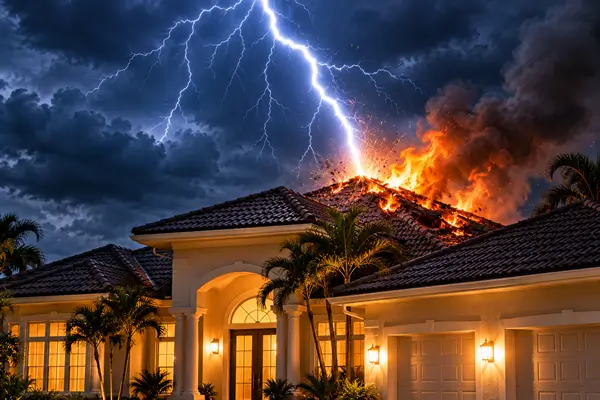
Lightning carries tremendous electrical energy, and the damage from a direct strike can be extensive.
1. Roof Fires and Structural Damage
Lightning can generate intense heat and electrical arcing. When it strikes a home, it may ignite combustible materials in the roof, attic, or walls.
In severe cases, a lightning-related fire can spread rapidly, resulting in extensive repairs or even the loss of the property.
2. Damage to Electrical Wiring and Appliances
Lightning can produce powerful electrical surges that damage household wiring and connected equipment.
Potentially affected items include:
- Air conditioning and heating systems
- Refrigerators and major appliances
- Televisions and computers
- Security cameras and alarm systems
- Smart home equipment
- Garage door openers and electronic controls
Replacing these systems can become expensive, particularly when multiple components are damaged simultaneously.
3. Hidden Damage Inside Walls and Attics
Not all lightning damage is immediately visible.
Electrical arcing and overheating may affect wiring, insulation, or structural components concealed within the building.
After a suspected lightning strike, a qualified professional should evaluate possible damage before affected electrical systems are used.
4. Expensive Repairs and Insurance Claims
Lightning-related damage can result in significant repair costs, temporary displacement, and insurance deductibles.
Even when insurance covers some of the damage, homeowners may still face unexpected expenses and the inconvenience of coordinating repairs.
A properly installed lightning protection system is a preventive measure that can help reduce these risks.
How Does a Lightning Rod Protect an Entire House?
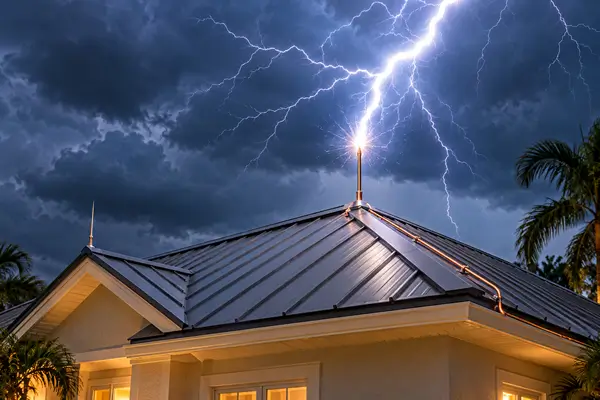
The principle behind lightning protection is straightforward: provide an engineered, low-impedance path for lightning current to travel safely toward the earth.
A complete system typically includes:
Lightning Rods (Air Terminals): Installed at strategically selected locations to intercept lightning strikes.
Conductors: Heavy-duty metal pathways that connect the air terminals to the grounding system.
Grounding Electrodes: Components that help dissipate lightning current into the earth.
Bonding: Connections that help reduce dangerous differences in electrical potential between conductive systems.
Together, these components help reduce the risk of fire, structural damage, and certain electrical hazards associated with lightning strikes.
Lightning rods do not attract additional lightning to a property, prevent thunderstorms, or guarantee that a building will never experience damage.
Their purpose is to help manage lightning current when a strike occurs.
Is Lightning Protection Worth the Investment?
Consider the potential consequences of a lightning strike.
A damaged roof, electrical system, HVAC unit, or home electronics can require substantial repairs. In some situations, lightning can also start a structural fire.
The cost of installing lightning protection varies depending on the property’s size, roof design, construction, grounding requirements, and other factors.
For many homeowners, the decision comes down to prevention.
A professionally installed system may help reduce the likelihood of certain costly lightning-related losses, while also providing peace of mind during severe weather.
Rather than waiting until damage occurs, homeowners can have their properties evaluated and determine whether lightning protection is a worthwhile investment.
Why Florida Homes Need to Take Lightning Seriously
Florida is well known for its frequent thunderstorms, especially during the spring and summer months.
Warm temperatures, humidity, and atmospheric conditions create an environment where thunderstorms can develop rapidly.
Homes throughout Central Florida, coastal communities, and inland neighborhoods may experience exposure to lightning.
Properties with large roof areas, elevated architectural features, detached structures, or extensive electrical equipment may have additional protection considerations.
However, lightning is not limited to tall buildings. A single-story home can also experience a direct strike.
That is why lightning protection should be evaluated based on the property’s individual characteristics rather than height alone.
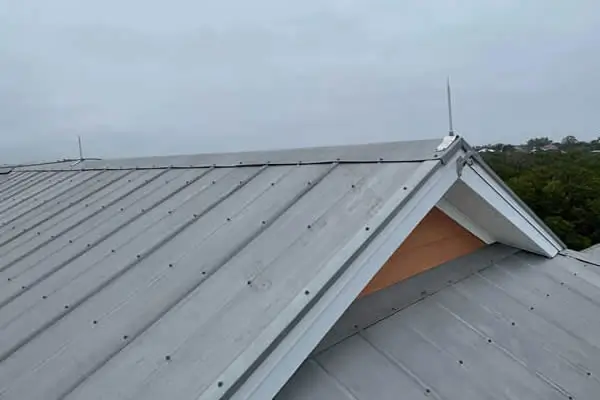
Can Lightning Rods Be Installed Without Affecting Your Home’s Appearance?
Many homeowners are surprised to learn that modern lightning protection systems can often be installed discreetly.
Depending on the building’s architecture, installers may be able to position air terminals and conductors in ways that minimize their visibility while maintaining the system’s effectiveness.
A properly designed system should consider both protection requirements and the appearance of the home.
Lightning protection can be incorporated into new construction or retrofitted to many existing homes.
Do Existing Lightning Protection Systems Need Inspection?
Yes. Like other building protection systems, lightning protection should be periodical